Insights
Decarbonisation as Enterprise Architecture in Resources in Australia: Perspectives from Japan
- Date 15 Apr 2026
- Filed under Insights
Written by
Nicola Redelinghuys
General Manager
Energy & Utilities Consulting
Mark Nold
General Manager
WA Clients & Industry
Philip Johnson
Industry Principal
Energy, Utilities & Resources
Takeshi Fujimura
Industry Development Lead
Australia’s resources sector is entering a structural transition in how it operates, invests and measures performance. What was once treated as an environmental reporting obligation has become a deciding factor in enterprise architecture, capital allocation and operational design. Decarbonisation is no longer peripheral to the business model; it is increasingly embedded within it.
One key driver of this shift is the reformed Safeguard Mechanism that was introduced in July 2023. The policy applies to facilities emitting more than 100,000 tonnes of CO₂-equivalent annually and requires emissions baselines to decline by roughly 4.9 percent each year through to 2030. For many large resource companies, this change fundamentally alters executive decision-making. Emissions are no longer simply a disclosure metric reported after the fact; they now operate as a constraint within the production model itself. Decisions about throughput, equipment deployment, energy supply and investment must be made with emissions intensity in mind.
Lessons from Japan’s energy transition
This transition is not unique to Australia. Around the world, governments and industries are experimenting with new operating models that integrate energy, digital infrastructure and economic policy.
Japan offers a particularly instructive comparison here. In recent years, Japanese decarbonisation initiatives have been framed not only as climate policy but also as a strategy for regional economic revitalisation. Programs such as Energy Resource Aggregation Business (ERAB), Virtual Power Plants (VPP) and community microgrids demonstrate how distributed energy resources can be coordinated within structured market and governance frameworks.
Several features of this approach stand out. Power purchase agreements, both on-site and off-site, have enabled companies and municipalities to adopt renewable energy without heavy upfront capital investment. Local governments have also played a more active role in energy governance, drawing inspiration from the German “Stadtwerke” model of municipally led utilities. Electric vehicles are increasingly integrated into regional resilience strategies as mobile energy storage assets, while biomass and hydrogen production are being developed in ways that link energy generation with local industrial ecosystems.
However, the most important lesson from these initiatives is not technological novelty but operating model redesign. Energy flows, data flows and financial flows are increasingly integrated into unified control architectures that allow organisations to manage complex systems in real time.
The most important lesson from these initiatives is not technological novelty but operating model redesign.
Japan’s debate around next-generation smart meters illustrates this shift clearly. The introduction of five-minute interval energy data and cross-utility data integration is enabling new monetisation models that extend beyond energy supply into areas such as healthcare services, security monitoring and location intelligence. High-resolution operational data, when governed effectively, becomes a platform for innovation rather than a regulatory burden.
At the same time, Japan’s experience highlights the complexity of decarbonisation at scale. The rapid expansion of artificial intelligence infrastructure and associated data centres has created new questions about energy efficiency, water consumption and environmental impact. Metrics such as power usage effectiveness (PUE) have become central to evaluating digital infrastructure, and the sector is increasingly aware that decarbonisation cannot be treated as a single-variable optimisation problem. Instead, it requires system-level design across energy, water and digital ecosystems.
The integration challenge
Australia now faces a similarly complex moment of transition. The country’s mining and energy industries operate highly capital-intensive assets distributed across remote geographies, often with limited grid connectivity. Within this context, the Safeguard Mechanism introduces a new layer of operational constraint. As illustrated in Figure 1, energy demand in Australia’s resources sector continues to grow rapidly, showing no signs of slowing down.
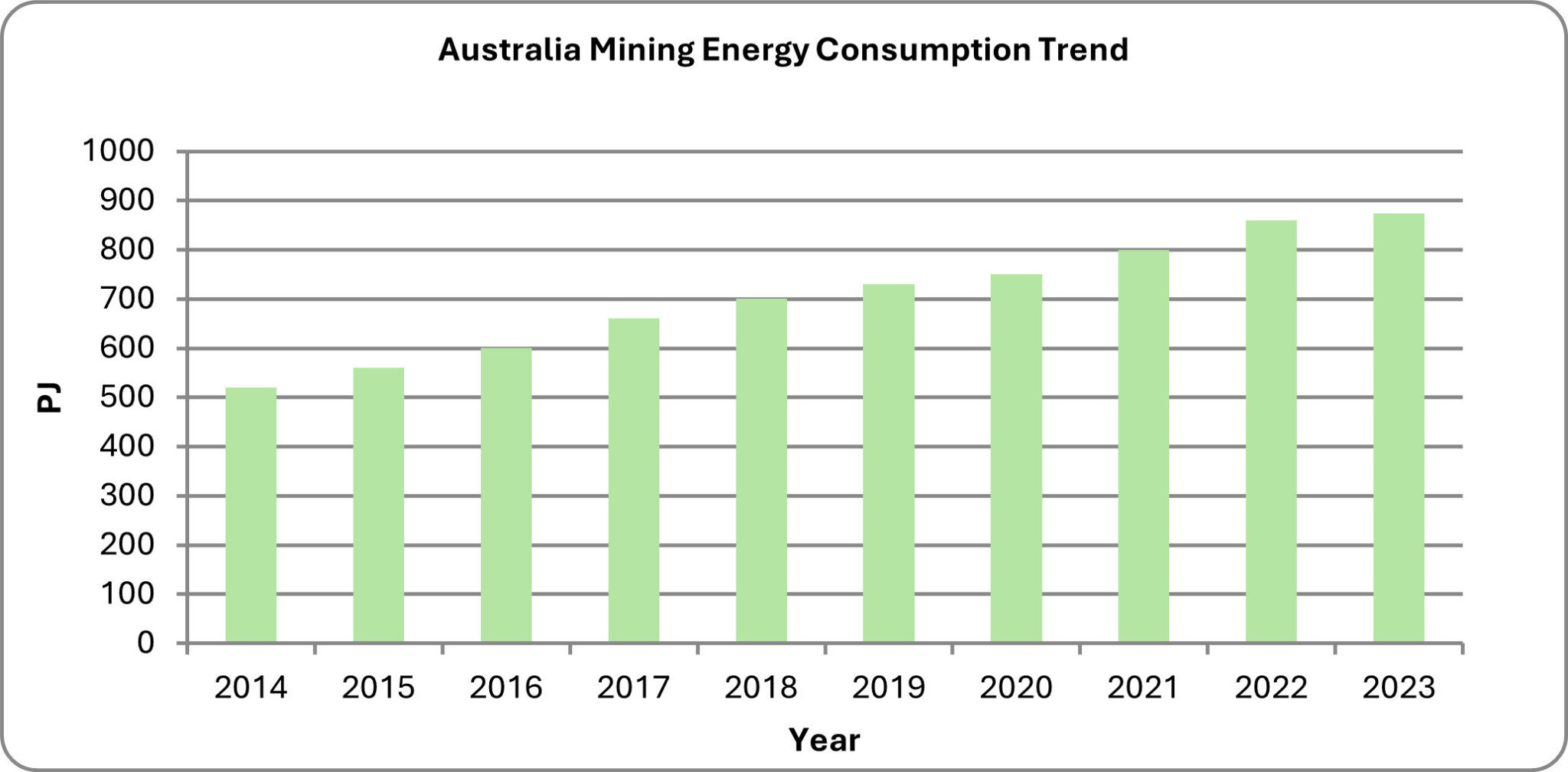
Figure 1 (Source: Australian Bureau of Statistics)
Emissions performance now directly influences investment decisions, including the electrification of mining fleets, fuel switching strategies and the deployment of renewable microgrids. It shapes procurement strategies for carbon offsets, such as Australian Carbon Credit Units (ACCUs) and Safeguard Mechanism Credits. It also affects production scheduling and long-term portfolio decisions, as companies weigh short-term output against long-term emissions trajectories.
These decisions cannot be made reliably without integrated and auditable data. Historically, emissions-related information has been fragmented across operational and corporate systems. For instance:
- Operational Technology platforms capture equipment performance and fuel consumption at site level
- Energy management systems track electricity flows
- Maintenance systems record asset health
- Enterprise resource planning platforms manage financial and procurement data
Because these systems evolved independently, they often lack the integration required to produce a coherent picture of carbon intensity across the enterprise.
As a result, many organisations face significant structural challenges. One of the most common is fragmented energy and carbon data. National Greenhouse and Energy Reporting (NGER) submissions are still frequently assembled through manual reconciliation processes. Fuel consumption may be recorded in site logs, electricity purchases captured in finance systems and production volumes stored in operational databases. Bringing these datasets together often requires time-consuming manual work, which slows reporting cycles and increases audit exposure. More importantly, the lack of integrated data limits the organisation’s ability to perform scenario modelling, evaluate abatement investments or link emissions performance to financial returns.
Lack of integrated data limits the organisation’s ability to perform scenario modelling, evaluate abatement investments or link emissions performance to financial returns.
Electrification presents another major challenge. Diesel remains the dominant fuel across many remote mining operations, yet the transition toward electrified equipment and renewable energy systems is accelerating. Whether companies pursue grid connections, renewable microgrids or hybrid generation systems, these strategies require a sophisticated understanding of energy flows. Load forecasting must be combined with modelling of renewable intermittency, storage optimisation and production planning. Without digital orchestration across these domains, electrification initiatives risk underperforming or introducing operational instability.
Capital and governance under pressure
Capital allocation decisions are also becoming more complex. Chief financial officers increasingly need to compare competing investment pathways, such as expanding production capacity versus funding emissions abatement technologies, purchasing offsets versus upgrading equipment, or prioritising short-term output gains versus avoiding long-term emissions penalties.
Most traditional capital governance frameworks, however, are not designed to incorporate carbon intensity as an embedded investment variable. Financial and environmental performance are often evaluated in parallel rather than together, which can lead to suboptimal portfolio decisions. At the governance level, the Safeguard Mechanism elevates emissions performance to a board-level risk category. Yet reporting in many organisations remains largely retrospective.
Boards receive static reports summarising past emissions performance rather than forward-looking insights into future risk exposure. Effective governance requires a more predictive perspective. Directors increasingly need visibility into the probability of baseline exceedance, the financial implications of potential carbon price scenarios, the sensitivity of emissions intensity to changes in production volumes, and the resilience of decarbonisation roadmaps under different operating conditions.
Meeting these needs requires a new form of enterprise architecture — one that treats carbon management not as a compliance workflow but as a digitally integrated operating system.

Building the operating model
Within this context, the role of technology and transformation partners is evolving. The challenge is no longer limited to implementing isolated software systems. Instead, organisations require coordinated transformation programs that connect strategy, governance and operational implementation. NRI Australia positions itself within this space as a transformation delivery partner capable of bridging these domains across complex, high-risk programs.
A practical Net-Zero Operating Model can be understood as a multi-layered architecture. At its foundation sits a unified carbon and energy data platform, typically implemented using a lakehouse-style architecture that integrates data from operational and enterprise systems. Fuel and electricity consumption captured in operational technology platforms are combined with production data, maintenance records and financial information from enterprise systems such as SAP S/4HANA. Offset registry data and emissions factors are integrated through centrally managed master data frameworks, ensuring that reporting boundaries, asset hierarchies and emissions factors remain consistent across the organisation. This structure enables automated regulatory reporting, including NGER and Safeguard submissions, reducing compliance cycle times and lowering audit risk.
A practical Net-Zero Operating Model can be understood as a multi-layered architecture.
Above this data foundation lies an integration layer that connects operational technology with enterprise IT systems. This integration enables real-time visibility into emissions intensity and energy consumption at the asset level. It supports advanced capabilities such as microgrid optimisation, predictive maintenance linked to energy efficiency and real-time tracking of diesel displacement as electrification initiatives expand. Importantly, this layer is not only technical. It also requires governance structures that clearly define accountability across operations, finance and sustainability functions.
The next layer introduces portfolio-level analytics that allow organisations to model decarbonisation strategies. Scenario modelling tools can:
- evaluate the financial return of electrification initiatives
- determine optimal levels of renewable penetration
- assess the timing of storage investments
- estimate exposure to volatile offset markets.
By embedding carbon intensity into these analytical models, companies can incorporate emissions considerations directly into capital committee deliberations.
For senior executives and boards, complex technical data must be translated into actionable intelligence. Dashboards designed for executive audiences can convert operational metrics into strategic indicators such as the probability of exceeding emissions baselines, projected financial exposure under different carbon price assumptions, the trajectory of emissions relative to corporate targets and the efficiency of abatement investments across the portfolio. When presented in this way, carbon management becomes an integral component of enterprise risk management rather than a separate ESG reporting stream.
The organisational side of the problem
Technology alone, however, does not deliver transformation. The final layer of the operating model involves organisational change and capability development. Large-scale system implementations frequently fail when they focus solely on technology while neglecting behavioural and governance change. Successful transformations require disciplined program governance, human-centred design approaches that ensure systems are usable by operational staff and strong executive sponsorship to align incentives across departments. Increasingly, these transformations also incorporate embedded artificial intelligence capabilities that enhance forecasting, optimisation and decision support.
The final layer of the operating model involves organisational change and capability development.
Experience from major enterprise transformations — including large-scale SAP S/4HANA implementations across global energy companies — demonstrates that the most difficult aspects of change are rarely technical. They involve aligning decision-making processes, redefining accountability and building the organisational capability required to operate within a new system architecture.
Seen in this light, the Safeguard Mechanism should not be interpreted solely as regulatory pressure. For organisations that approach it strategically, it can act as a catalyst for operational modernisation. By integrating energy, carbon and financial data into a unified operating model, companies can:
- reduce the risk of exceeding emissions baselines
- lower emissions intensity per tonne of output
- accelerate the return on electrification investments
- strengthen capital discipline across the enterprise
Such capabilities also enhance credibility with investors and regulators, who increasingly view decarbonisation performance as a proxy for management quality and long-term resilience.
The competitive frontier in the resources sector is therefore shifting. Production efficiency remains important, but it is no longer sufficient on its own. Increasingly, competitive advantage will depend on the sophistication of an organisation’s operating model and its ability to integrate digital systems, energy infrastructure and financial governance into a coherent whole.
In this context, net-zero is not simply a sustainability initiative. It represents a redesign of the enterprise architecture that underpins the modern resource company.